


Guoneng Cornerstone
The liquid-phase synthesis of nanomaterials serves as a vital bridge between the microscopic world and macroscopic applications, and solvent purity is the key factor determining the performance of nanomaterials. Research and development of nanomaterials has long been hampered by the challenges posed by solvent impurities: trace impurities in conventional solvents can affect the nucleation and growth of crystals, leading to nanoparticle agglomeration and particle size distribution issues, which in turn compromise the material’s optoelectronic and catalytic properties. Consequently, many promising nanomaterials struggle to achieve large-scale production and application, becoming a major bottleneck in the translation of research findings into practical applications.

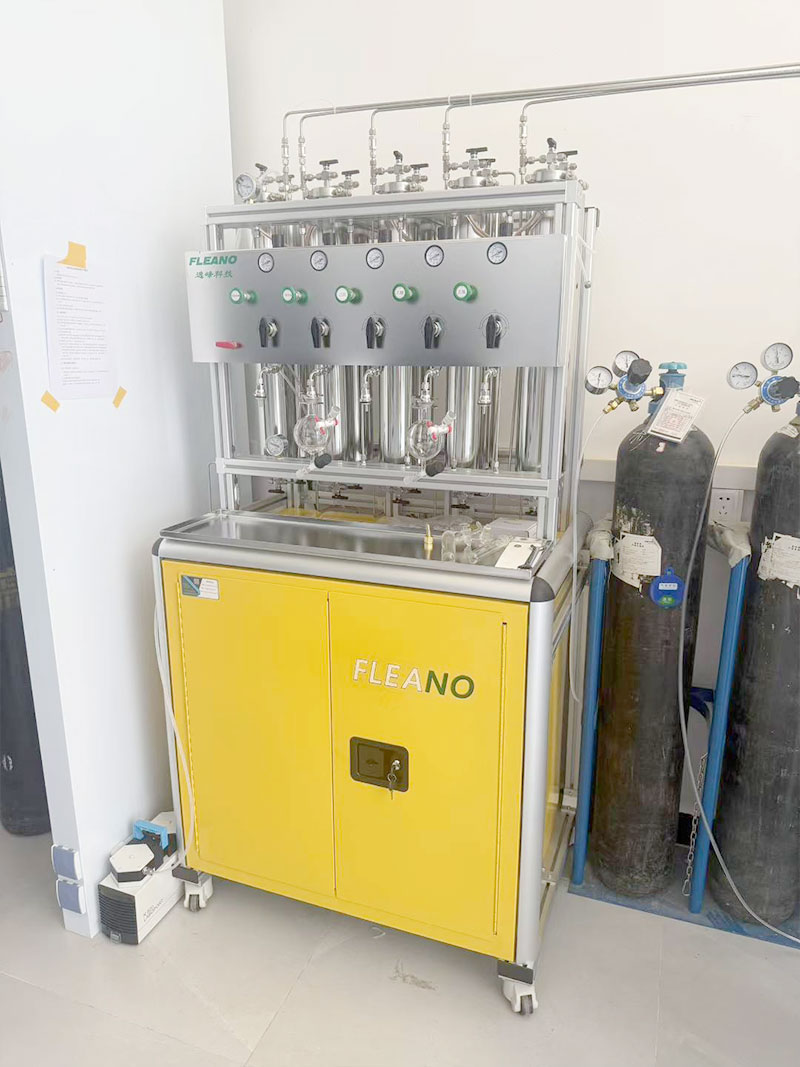
Beijing Yifeng Technology Co., Ltd.’s solvent purification system empowers the institute’s nanomaterial R&D with its stable purification performance. Employing multi-stage filtration and deep adsorption processes, the system thoroughly removes impurities such as water and metal ions from solvents, ensuring consistent solvent purity and providing a stable, pristine reaction environment for the liquid-phase synthesis of nanomaterials. The system can adjust purification parameters in real time to meet the specific requirements of nanomaterial synthesis, accommodating the synthesis of various nanomaterials such as gold nanoparticles, quantum dots and metal oxides, whilst enabling the recycling of solvents, thereby reducing R&D costs.
Since its introduction, the Yifeng solvent purification system has become a core pillar of nanomaterial R&D. The stable supply of high-purity solvents makes the nucleation and growth of nanoparticles more controllable, resulting in a more uniform particle size distribution. The optoelectronic and catalytic properties of the materials have been significantly optimised, and the agglomeration issues previously caused by impurities have been completely resolved. Leveraging this pure solvent environment, researchers have successfully achieved the large-scale preparation of various nanomaterials, providing a high-quality material foundation for application fields such as nanocatalysis and biosensing. Innovative ideas that were once hindered by impurities have taken root and flourished under the support of the Yifeng system, showcasing the allure of science and technology. This has helped the university remain at the forefront of exploration in the field of nanomaterials, injecting sustained momentum into the development of the new materials industry.
(The above content is for reference only and is not directly associated with any university or enterprise.)