


Peking University Shenzhen Research Institute
In the realm of organometallic catalysis research, the precise progression of every reaction relies on the silent support of high-purity solvents. During the development of novel catalysts, researchers have long been hampered by the limitations of traditional solvent purification methods—conventional distillation, adsorption methods—are time-consuming, with a single purification cycle taking several days. Moreover, it is difficult to consistently control the water and oxygen content in the solvent; even trace impurities can cause deviations in catalytic reactions, leading to scattered experimental data and a lack of reproducibility. This can even bring extensive prior research to a standstill, becoming a critical bottleneck hindering the exploration of catalyst mechanisms.

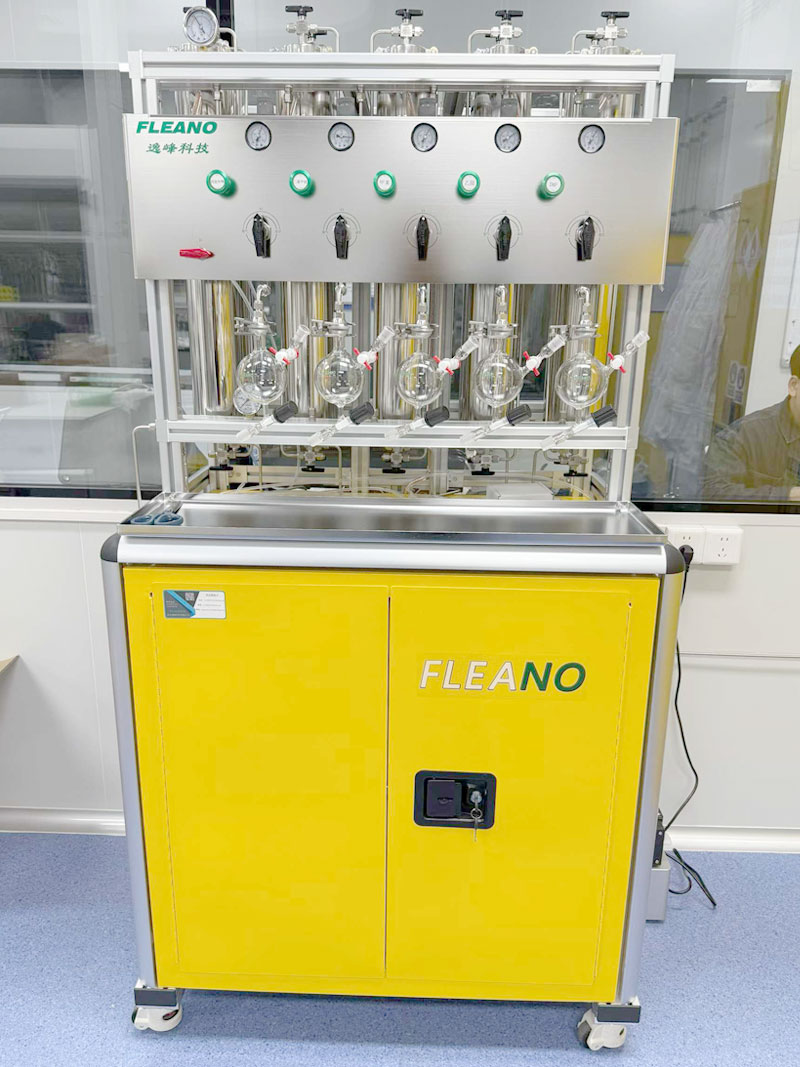
When Beijing Yifeng Technology Co., Ltd.’s solvent purification system was installed in the laboratory, this predicament was resolved. Relying on pressurised inert gas and dual-column deep adsorption technology, the system eliminates the cumbersome processes of traditional methods, enabling real-time online purification of solvents and maintaining water and oxygen content at a stable level of parts per million (ppm), thereby isolating impurities from interfering with reactions at the source. The system requires no dedicated personnel to monitor it throughout the process; its automated operation significantly reduces the time costs for laboratory staff, allowing researchers to focus their efforts on exploring and optimising catalytic reaction mechanisms rather than on the tedious operations of solvent purification.
Since its introduction, the Yifeng Solvent Purification System has laid a solid foundation for the institute’s organometallic catalysis research. Catalytic reaction yields have steadily increased, by-products have been significantly reduced, and experimental cycles have been shortened by nearly half compared to previous methods. Several cutting-edge research projects, which had previously stalled due to insufficient solvent purity, have now progressed smoothly. Experimental data, once plagued by impurities, is now precise and reliable, providing solid support for the development of novel, highly efficient catalysts. Nourished by pure solvents, the path of scientific research has blossomed into even more brilliant innovations, helping researchers to venture further and more steadily in their explorations of the field of organic catalysis.
(The above content is for reference only and is not directly associated with any institution or enterprise.)