


Chinese Academy of Sciences
The research and development of organic optoelectronic materials represents a key area of innovation in the field of optoelectronic information, and the purity of solvents directly determines the optoelectronic properties of the materials and the stability of the devices. In the research and development of organic optoelectronic materials (such as organic small-molecule luminescent materials and organic semiconductor materials), researchers have long faced challenges posed by solvent impurities: fluorescent impurities and trace amounts of water and oxygen in traditional solvents can affect the luminescence efficiency and carrier mobility of the materials, leading to rapid deterioration in device performance. Consequently, the development of many novel organic optoelectronic materials has been hindered by solvent-related issues, creating a bottleneck that constrains the translation of research findings into practical applications.

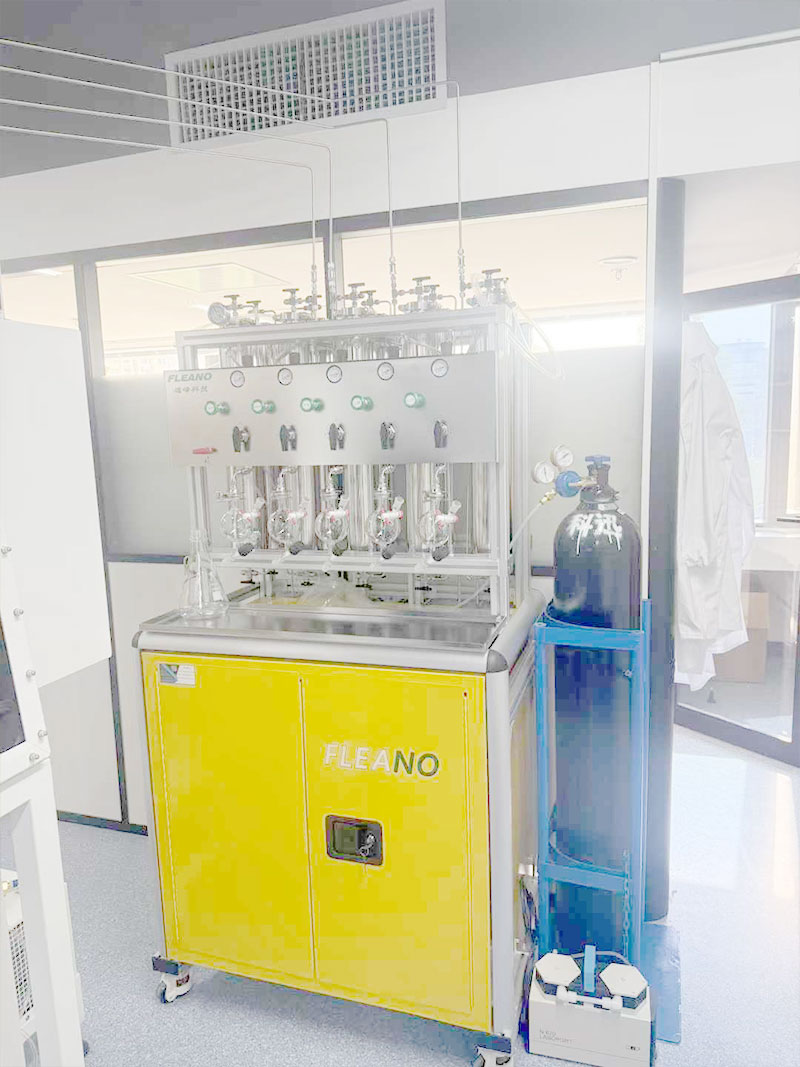
To address this challenge, the School has introduced a solvent purification system from Beijing Yifeng Technology Co., Ltd. Tailored for solvents commonly used in the synthesis of organic optoelectronic materials—such as toluene, chlorobenzene and acetonitrile—the system optimises the removal of fluorescent impurities and trace amounts of water and oxygen. It thoroughly eliminates interfering substances from the solvents, ensuring their purity meets the stringent requirements of organic optoelectronic synthesis. The system features a fully sealed design to prevent the ingress of airborne impurities. It also enables automated solvent dispensing and real-time monitoring of solvent purity, ensuring that every drop of solvent meets experimental requirements and providing a stable, pure environment for the synthesis of organic optoelectronic materials.
The commissioning of the Yifeng Solvent Purification System has injected new vitality into the institute’s research and development of organic optoelectronic materials. The purified solvents have significantly enhanced the luminous efficiency of organic optoelectronic materials and markedly optimised carrier mobility, whilst simultaneously ensuring both the stability and service life of devices. Issues of performance degradation previously caused by impurities have been thoroughly resolved. Researchers are now able to focus on modifying material structures and optimising device designs, successfully developing a range of high-performance organic optoelectronic materials that demonstrate broad application prospects in fields such as organic light-emitting diodes and organic solar cells. With its professional expertise, Yifeng Technology is driving continuous breakthroughs in the exploration of the organic optoelectronics field, unlocking greater potential for the future of the optoelectronic information industry.
(The above content is for reference only and is not directly associated with any institution or enterprise.)